
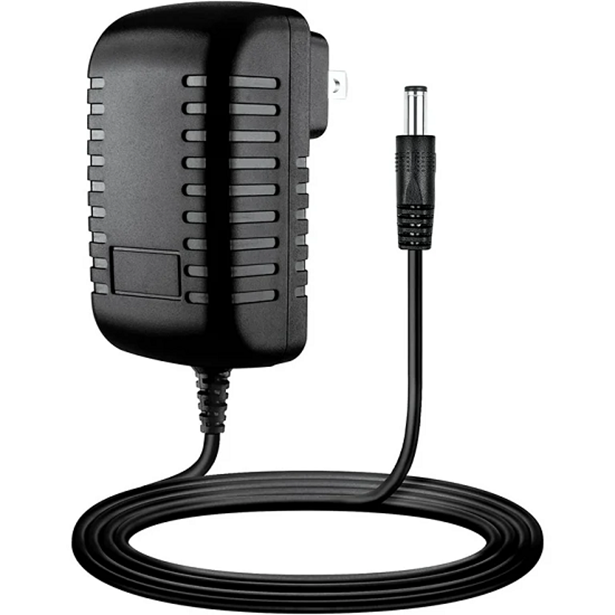
When a power cable goes missing or a charger finally gives up, the hunt for a replacement begins. It is a search often clouded by well-meaning but dangerously wrong advice. Misconceptions about how electricity works are everywhere and following them can lead to frustration, wasted money or worse, a permanently damaged game console.
These myths often sound plausible, making it easy to grab the wrong cable from a drawer and hope for the best. But when it comes to powering sensitive electronics, hope is not a strategy. This article will debunk the most common myths about console power compatibility, explain what is actually true and give you the confidence to choose the right charger every time.
Myth: All Power Cables Are the Same
This is perhaps the most widespread and dangerous myth. It’s the belief that if the plug fits, it must work. While modern devices have adopted standardized connectors, the electricity flowing through the cable can be wildly different.
The truth is that power supplies are designed for specific tasks. A charger for a Nintendo 64 is fundamentally different from one for a PlayStation 2 Slim, even if their plugs look vaguely similar. Retro consoles, in particular, come from an era of proprietary designs where almost nothing was interchangeable. Using a Sega Genesis power brick on a Super Nintendo is a recipe for disaster.
Even with modern “Figure-8” cables that are physically identical, quality can vary. A thin, cheap cable intended for a low-power clock radio might not be able to safely handle the energy demands of a PlayStation 5, leading to overheating. The shape is only half the story.
Myth: Voltage Doesn’t Matter (As Long As It’s Close)
This myth suggests you can use a 12V adapter on a 9V console because it is “close enough.” This is like saying you can run a petrol car on diesel because they are both fuel.
Voltage (V) is electrical pressure. A console’s internal components are designed to withstand a very specific amount of this pressure.
- Too much voltage: Sending 12V into a 9V system is like over-inflating a tire. The pressure is too high, which will overwhelm the circuits and fry the motherboard, often instantly.
- Too little voltage: Sending 5V to a 9V system means there is not enough pressure to make the components work. The console likely will not turn on at all.
There is no “close enough” with voltage. It must match what is printed on the console’s label.
Myth: Any USB-C Charger Will Work
The arrival of the USB-C standard was meant to simplify our lives, but it has created its own set of myths. While the Nintendo Switch uses a USB-C port for charging, it does not mean any USB-C charger you own will work correctly or safely.
The issue lies with the USB Power Delivery (PD) protocol. Different chargers support different voltage and amperage profiles. A basic phone charger might only output 5V at 1A. The Nintendo Switch, especially when docked, requires a specific 15V profile to function and display on a TV.
Using an underpowered USB-C charger can lead to:
- The console not charging at all or charging incredibly slowly.
- The battery draining even while plugged in during gameplay.
- The console refusing to enter “docked mode” for TV play.
- In rare cases, low-quality third-party chargers have been known to damage the Switch’s delicate charging port.
What Actually Matters When Choosing a Charger
Now that we have busted the myths, let’s focus on the facts. True console power compatibility comes down to matching a few key specifications between the power supply and the console.
How Compatibility Is Determined
Think of this as a three-point safety check. For a replacement game console charger to be safe, it must pass all three tests.
- Voltage (V) Must Match Exactly: This is non-negotiable. If your console’s label says “INPUT: 9V,” you must use a power supply with an “OUTPUT” of 9V.
- Amperage (A) Must Be Equal To or Higher: Amps are the amount of available current. Your console will only “draw” what it needs. If your console needs 2A, a 3A adapter is perfectly safe (it just has extra capacity). However, a 1A adapter is not safe, as the console will try to draw more power than it can provide, causing the adapter to overheat and fail.
- Polarity and Connector Must Match: The physical plug must fit correctly and for barrel connectors, the polarity must match. The polarity symbol (a dot and circle with + and – signs) on the adapter must be identical to the one on the console. Getting this wrong sends electricity backward, causing a short circuit.
Myth: More Amps Will Damage My Console
This is a common point of confusion. Many people see a replacement adapter with a higher amp rating than their original and worry it will “force” too much power into their console.
This is not how electricity works. The console is in control; it pulls the current it needs. The amp rating on a charger is its maximum capacity. A higher amp rating is actually better, as it means the power supply is not working at its absolute limit. It will run cooler and last longer. Just remember, this only applies to amps, voltage must still match exactly.
Conclusion
Navigating the world of game console chargers is much simpler when you ignore the myths and focus on the facts. It is not about finding a plug that fits; it’s about matching the precise electrical diet your console needs to thrive. By checking the voltage, ensuring sufficient amperage and verifying the plug and polarity, you can eliminate the guesswork and power your hardware with confidence.
If you want to skip the technical checks and be certain you are getting a safe, compatible product, the best approach is to buy from a specialist. A knowledgeable supplier has already done the verification for you. For gamers looking for tested and reliable replacement console chargers, Campad Electronics offers a wide range of power solutions that are guaranteed to be compatible with your specific system, from retro classics to the latest generation.
You can explore their complete collection here: Campad Electronics Game Console Chargers.