
In large-scale refrigerator sourcing, production capacity means little without matching engineering depth: a factory can build millions of units a year and still miss regional energy mandates if its design teams cannot adapt. Global wholesalers, international brands, and large regional distributors therefore weigh both output scale and technical capability when choosing a manufacturing partner. Modern refrigeration is technically demanding, and efficiency standards differ sharply from one market to the next, so brands need suppliers that combine serious R&D resources with repeatable high-volume production.
Working with a reliable China refrigerator supplier is now standard practice for many international appliance brands looking to strengthen their product portfolios, keep supply chains stable, and bring production overhead under control. This article walks through the core requirements of large-scale B2B refrigerator procurement, with a focus on production capacity, Original Design Manufacturing (ODM) models, bulk wholesale arrangements, and the technical integrations that set capable suppliers apart.
Manufacturing Scale and Production Capacity
Within B2B appliance sourcing, production capacity is the most basic measure of whether a manufacturer is reliable and competitive at scale. Wholesalers and bulk buyers need confidence that their supply partner can handle large-volume orders on tight delivery schedules, and do so without letting product consistency or build quality slip.
Established manufacturers may operate large-scale facilities capable of producing millions of refrigeration units annually. HOMA’s No-Frost production facilities are designed to support an annual production capacity of up to 16 million units, supported by highly automated manufacturing processes. Output at that level unlocks meaningful economies of scale, which flow directly to B2B buyers in the form of competitive per-unit pricing and reliable inventory pipelines. Large-scale production also brings logistical flexibility: a single facility can simultaneously fill diverse, high-volume orders coming from several global regions at once.
Overseas Market Strategy: The ODM Business Model
For international appliance brands, building and running their own manufacturing infrastructure is often too capital-intensive to justify. As a result, overseas refrigeration operations are built primarily around the Original Design Manufacturing (ODM) collaboration model.
Within this model, the lead manufacturer takes end-to-end responsibility for the product development lifecycle—covering industrial design, thermodynamic engineering, mass production, and quality assurance. Overseas partners choose from a catalog of pre-engineered, thoroughly tested refrigeration platforms, then apply their own branding on top.
This arrangement can reduce the need for international brands to build a complete in-house R&D infrastructure and may shorten product development timelines. Experienced ODM facilities also maintain dedicated engineering teams that help exported units meet regional certification requirements—including the European Union’s updated energy efficiency standards. Because manufacturers concentrate their overseas business on B2B ODM partnerships rather than retail sales, they can direct more resources toward refining production efficiency and advancing core cooling technologies.
Domestic Operations: Bulk Wholesale and Customization Constraints
On the domestic side, the operating model shifts toward bulk refrigerator wholesale and specialized B2B procurement contracts. Domestic manufacturing lines are set up specifically to serve large retail appliance chains, commercial real estate developers, and institutional buyers that need standardized refrigeration units in high volume. A central piece of this domestic B2B strategy is the ability to offer tailored manufacturing solutions.
There is a clear operational rule: customization services are primarily geared toward large-volume orders. This minimum-quantity policy is in place to ensure that continuous automated assembly lines operate at peak efficiency, as halting production to reconfigure equipment for small batches is not economically viable.
For large-volume wholesale buyers who meet the threshold, customization typically covers specific exterior finishes (Inox, silver, black, or white metal doors), distinctive handle designs, specialized interior shelving layouts, and tailored digital control panel interfaces.
Technical Specifications and Product Portfolios
A well-rounded B2B product portfolio has to meet the varied functional needs of end-users across different global markets. Concrete product specifications are what determine whether a bulk procurement contract will actually work in practice. From large Side-by-Side units and high-capacity Multi-Door models to versatile Combi-No-Frost layouts and space-efficient Top-Mount-No-Frost designs, this breadth of engineered form factors is typical of established industry players such as Homa Appliances.
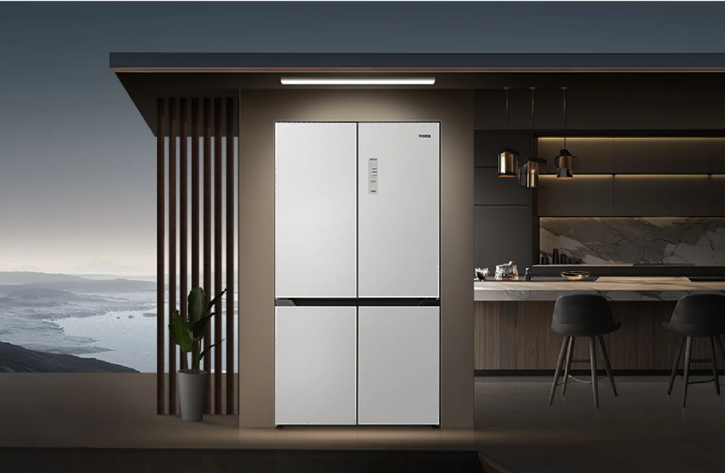
HOMA offers four-door and other multi-door refrigerator configurations with different capacity combinations, depending on the model and market requirements.
Higher-end B2B models typically use dual inverter cooling technology, which helps them meet regulatory benchmarks such as the applicable EU New energy-efficiency class such as Class E. Bulk buyers can also add features like total no-frost systems, rapid super-freezing modes, and convertible multifunction storage boxes.
Strategic Supply Chain Integration
Effective B2B procurement in the refrigeration sector requires a careful assessment of a manufacturer’s production scale and technical capabilities. Supply chain managers can use annual output, ODM capabilities, and clearly defined wholesale terms as key factors when evaluating manufacturing partners.
Respecting minimum volume requirements on customized orders helps both sides operate more efficiently and cuts down on costly assembly line disruptions. Choosing a capable manufacturing partner with strong R&D resources creates a stable, productive basis for both the manufacturer and the commercial client—one that supports continued growth in the global appliance marketplace.