
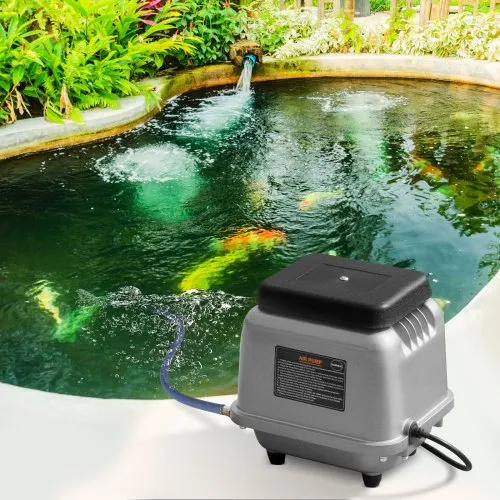
When people think about pond equipment, they usually picture pumps, filters, or UV lights. Rarely does the pond air pump get the attention it deserves. Yet this small, often overlooked device plays a massive role in keeping pond water healthy, fish active, and ecosystems balanced.
A pond air pump doesn’t move water the way a circulation pump does, and it doesn’t clean debris like a filter. Instead, it focuses on something far more fundamental—oxygen. Oxygen is life in a pond. Without enough of it, even the most advanced filtration system can struggle, and fish health declines faster than most pond owners expect.
Think of a pond air pump as the lungs of your pond. It helps the water breathe. It keeps oxygen circulating, prevents stagnation, and supports the invisible biological processes that make a pond thrive. Whether you have a small garden pond or a large koi system, aeration can mean the difference between constant problems and long-term stability.
In this article, we’ll explore what pond air pumps are, how they work, and why they’re one of the smartest upgrades any pond owner can make.
Introduction to Pond Air Pumps and Why They Matter
Pond air pumps matter because they address one of the most common and underestimated pond problems—low oxygen levels. While water may look clear on the surface, oxygen depletion can quietly develop underneath, especially in warm weather or heavily stocked ponds.
In natural lakes and rivers, oxygen is constantly replenished through wind, flowing water, and large surface areas. Backyard ponds don’t have those advantages. Water can become stagnant, particularly at the bottom, where waste accumulates and oxygen struggles to reach.
This is where a pond air pump becomes essential. By releasing streams of air bubbles, it promotes gas exchange at the surface and circulates oxygen throughout the water column. This simple action supports fish, beneficial bacteria, and even plant roots.
Another reason pond air pumps matter is prevention. Many pond issues—fish stress, foul odors, slow filtration, and algae blooms—can be traced back to poor oxygenation. Aeration doesn’t just fix problems; it helps prevent them from forming in the first place.
What Is a Pond Air Pump? A Simple Explanation
A pond air pump is a device that pushes air through tubing into diffusers or air stones placed inside the pond. These diffusers release small bubbles that rise to the surface, increasing oxygen levels in the water.
The process might look simple, but the impact is powerful. As bubbles rise, they create gentle water movement, pulling low-oxygen water from the bottom upward. This helps eliminate dead zones where harmful gases can build up.
Unlike water pumps, air pumps don’t rely on high flow rates or pressure. Their job is consistency—providing a steady supply of air day and night. Most pond air pumps are designed for continuous operation and consume very little electricity.
In short, a pond air pump doesn’t replace other equipment. It complements it. Filters clean water, pumps move it, and air pumps help it breathe.
Why Oxygen Is Critical for Pond Health
Oxygen is the invisible backbone of a healthy pond. Fish rely on dissolved oxygen to breathe, just as humans rely on air. When oxygen levels drop, fish become sluggish, stressed, and more susceptible to disease.
Beneficial bacteria also depend on oxygen. These bacteria break down fish waste, uneaten food, and organic debris. Without enough oxygen, this biological filtration slows down, leading to ammonia buildup and poor water quality.
Low oxygen can also create anaerobic conditions at the pond bottom. This leads to the production of harmful gases like hydrogen sulfide, which causes foul odors and can be toxic to fish.
By increasing oxygen levels, a pond air pump supports every living component of the ecosystem. It’s not just about keeping fish alive—it’s about keeping the entire pond system balanced and resilient.
How a Pond Air Pump Works
The mechanics of a pond air pump are straightforward. The pump draws in air from the surrounding environment and pushes it through airline tubing. This air travels to diffusers or air stones placed in the pond.
Diffusers break the air into fine bubbles. Smaller bubbles are more effective because they rise slowly, increasing contact time with the water. This allows more oxygen to dissolve before reaching the surface.
As the bubbles rise, they create vertical circulation. Oxygen-poor water from the bottom is lifted upward, while oxygen-rich water spreads throughout the pond. This gentle mixing prevents stratification, where different water layers develop uneven oxygen levels.
The result is a more uniform, healthier environment—without disturbing fish or plants.
Key Benefits of Using a Pond Air Pump
One of the biggest benefits of a pond air pump is improved fish health. Fish become more active, eat better, and experience less stress in well-oxygenated water.
Another major benefit is enhanced biological filtration. Beneficial bacteria thrive in oxygen-rich conditions, making filters more effective and reducing toxic waste buildup.
Aeration also helps reduce algae problems. While air pumps don’t kill algae directly, they discourage conditions that favor harmful algae growth. Better oxygenation supports beneficial organisms that compete with algae for nutrients.
Additionally, pond air pumps help prevent foul odors by reducing anaerobic zones. The water smells fresher, looks healthier, and requires less intervention.
Types of Pond Air Pumps
Not all pond air pumps are the same. Choosing the right type depends on pond size, depth, and intended use.
Diaphragm Air Pumps
Diaphragm air pumps are the most common choice for residential ponds. They’re energy-efficient, quiet, and affordable. These pumps work well for small to medium-sized ponds and are easy to maintain.
Piston Air Pumps
Piston air pumps are more powerful and designed for larger ponds or deeper water. They deliver higher air output and are often used in koi ponds or commercial applications.
Solar Pond Air Pumps
Solar air pumps run on renewable energy and are ideal for remote ponds without electricity access. While output is lower, they’re a great eco-friendly option for wildlife ponds.
Choosing the Right Pond Air Pump
Selecting the right pond air pump starts with understanding your pond’s size and depth. Larger ponds require higher air output, while deeper ponds need stronger pressure to push air down.
Another factor is diffuser placement. Multiple diffusers provide more even oxygen distribution than a single large one. Matching the pump’s capacity to the number of diffusers ensures efficient operation.
Noise level is also worth considering. Quality pond air pumps are designed to run quietly, but placement and housing can further reduce sound.
Choosing the right pump ensures consistent aeration without wasting energy or money.
Seasonal Benefits of Pond Air Pumps
In summer, warm water holds less oxygen. Fish are more active, and biological processes speed up, increasing oxygen demand. A pond air pump prevents dangerous oxygen drops during heatwaves.
In winter, air pumps help keep small areas of the pond surface ice-free. This allows harmful gases to escape and oxygen to enter, protecting fish during cold months.
Year-round aeration stabilizes the pond, making seasonal transitions smoother and safer.